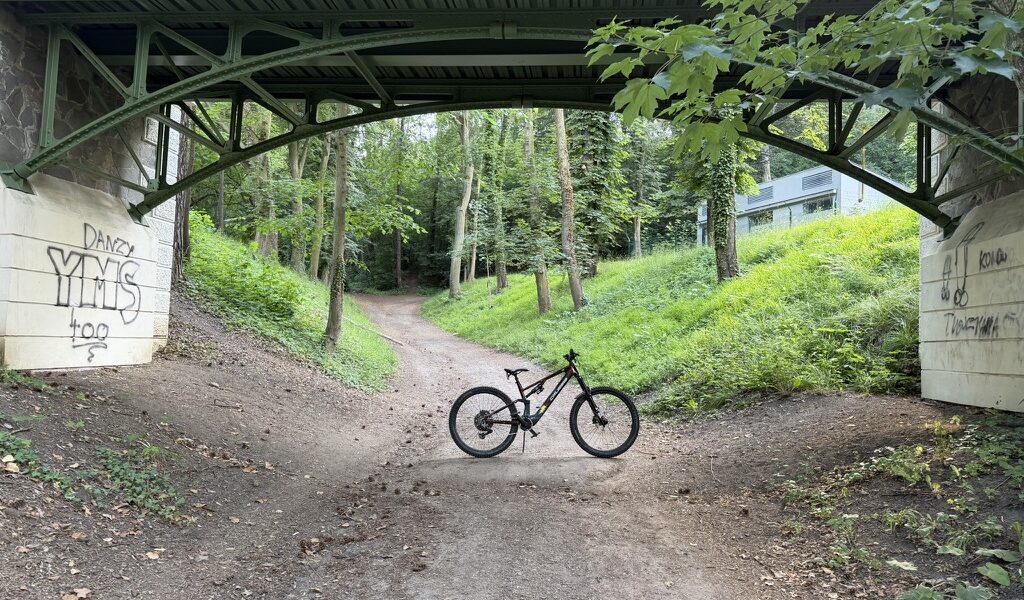
The Bike That Runs at 240%: An Honest Review of the Crussis e-Full 12.11 DJI Avinox After 900 km (560 miles)
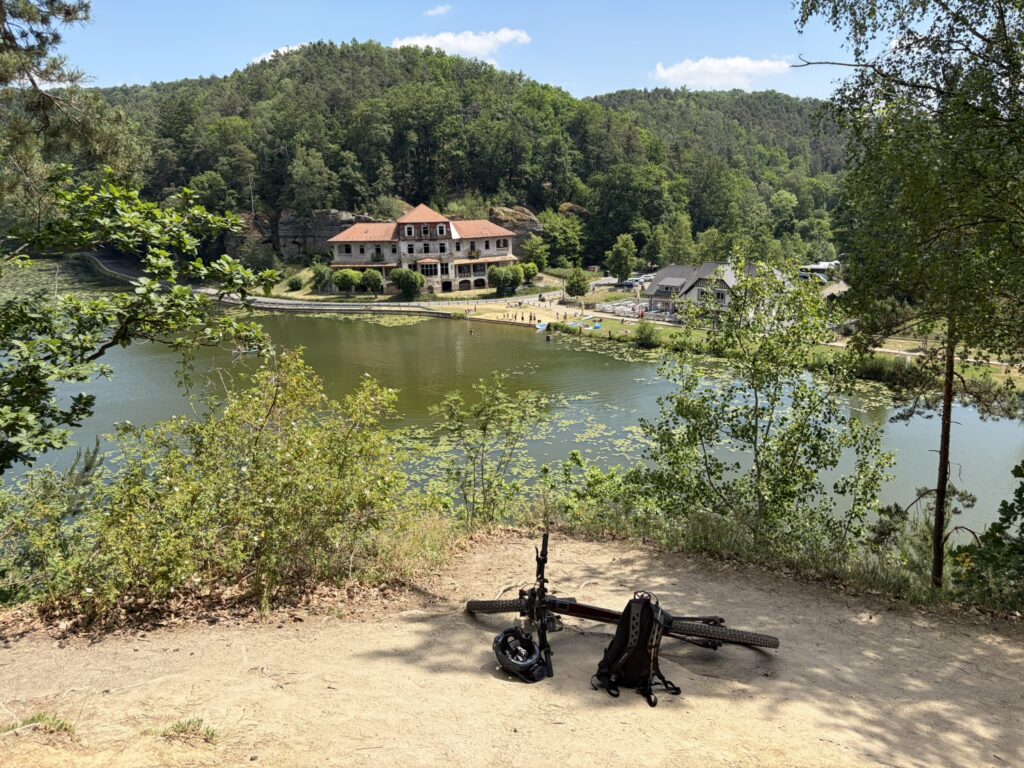
Welcome to this deep-dive review of the Crussis e-Full 12.11 e-bike. To be completely upfront, this isn’t your typical dry, superficial review copied from press releases. It is a comprehensive mix of real-world impressions and hard data from a user who managed to put over 900 km (560 miles) of brutal riding on this machine in just a single month of intensive use. You won’t find generic marketing slogans here—just raw reality from bike paths, deep forests, and rough bike park trails.
In the current market lineup, the Crussis e-Full 12.11 represents the absolute best „value for money.“ You get a highly capable, full-carbon frame and a perfectly balanced component package without paying an outrageous premium for elite marketing status. The lower 11.11 model is too compromised in its components, while the higher-tier Pro and Pro X models simply do not make economic sense for a rational rider. This model strikes the ultimate sweet spot.
Strategic Decision: Why Crussis Over Amflow, Pivot, or Mondraker?
When DJI shocked the cycling world by introducing the revolutionary Avinox drive system, I knew immediately that I wanted a bike powered by this motor. However, making the final choice was tricky, as a whole fleet of premium brands—including Amflow, Canyon, Mondraker, and Pivot—adopted the Avinox system. My choice ultimately fell on the Czech-brand Crussis for highly rational, pragmatic reasons:
- Immediate Real-World Availability: While delivery times for the Amflow (which is essentially DJI’s own reference showcase project) keep getting delayed and European shipments remain mostly empty promises, Crussis actually delivered physical bikes to dealer showrooms. Finding a last-minute XL frame felt like an absolute miracle, but the bike physically existed, and I could pick it up immediately. If you are hunting for an Avinox-powered machine right now in June, international brands are looking at delivery dates late into the autumn or even next year.
- Unmatched Price-to-Performance Ratio: The Crussis e-Full 12.11 retails for approximately €5,900 ($6,400). When you look at the price tags of the Amflow Carbon Pro or high-end variants from Pivot and Mondraker featuring this drive unit, you are easily starting well past €8,000 ($8,600), often approaching the €11,000 ($12,000) mark. Yet, the drive system—the very heart and soul of the bike—is completely identical.
- Local Support and Service Infrastructure: Dealing with a complex full-suspension e-bike means that if anything goes wrong with the carbon frame, integrated electronics, or linkage pivots, having direct European manufacturer backing is an enormous asset. Dealing with warranties or specialized replacement parts via direct-to-consumer online brands or boutique importers often means weeks of waiting and shipping a bike in a cardboard box across borders.
Technical Breakdown of Components and Hardware
The bike is built around a full-carbon frame featuring modern all-mountain geometry. Every single component was selected with one clear objective: to tame the brutal power of the motor and keep this heavy, 24+ kg (53 lbs) machine composed on the trail. Let’s dissect the core hardware elements.
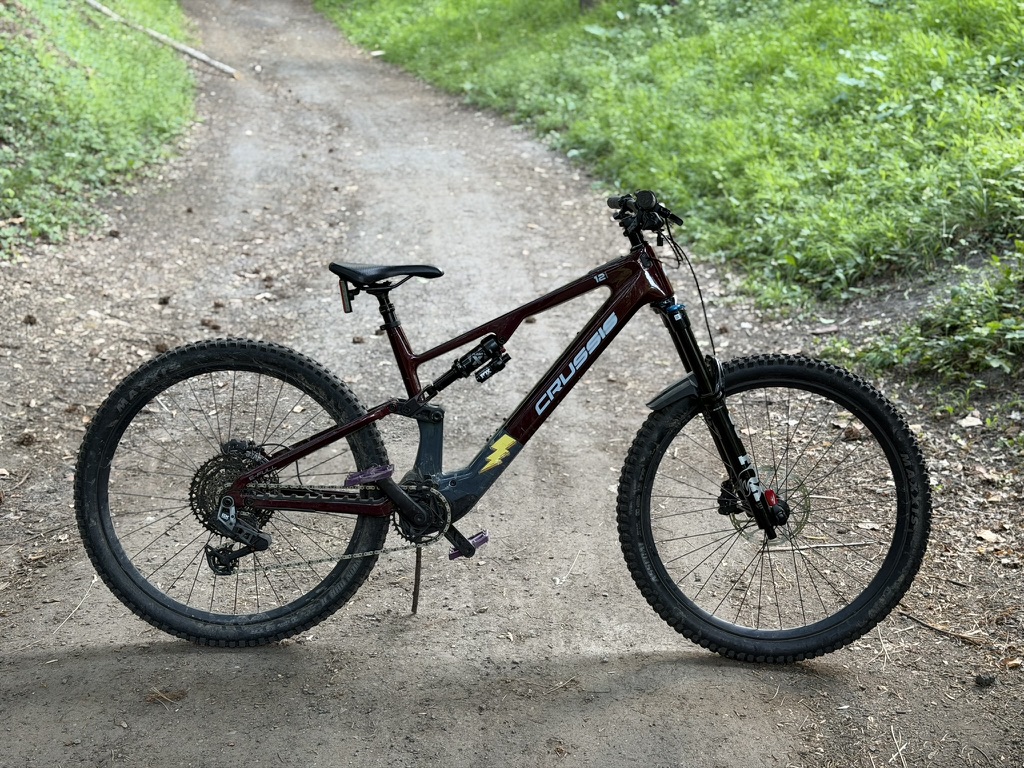
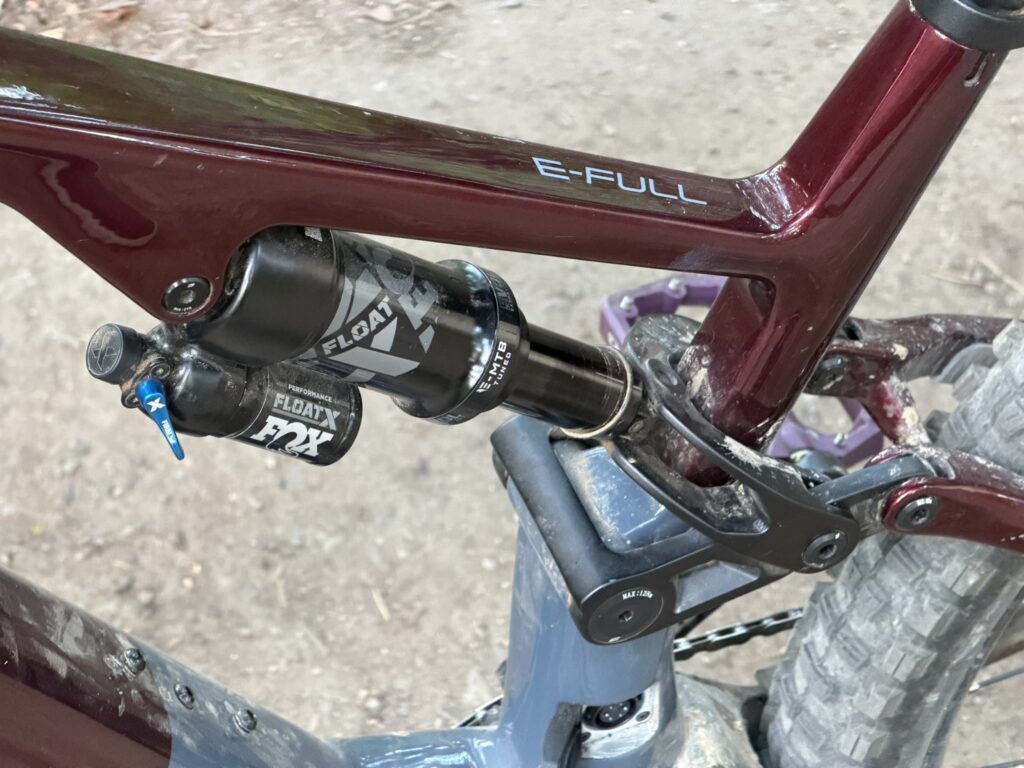
FOX 36 Performance Grip Fork & FOX Float X Shock (160mm/150mm Travel)
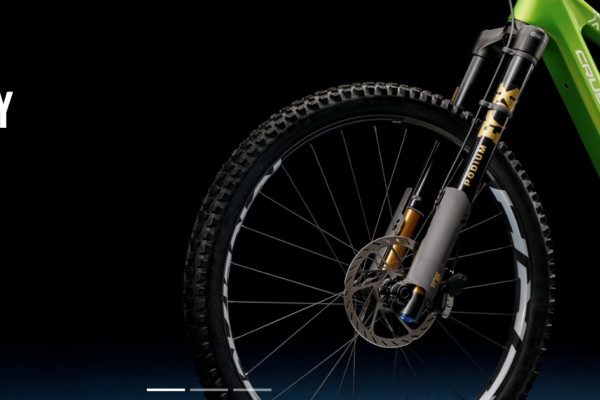
Suspension duties are handled by the legendary American brand. Up front, a 160mm FOX 36 air fork works in tandem with a 150mm FOX Float X piggyback rear shock. This chassis irons out small bumps, roots, and rocks incredibly well, offering immense comfort on long epic rides. Thanks to its higher oil volume and external reservoir, the Float X shock resists overheating even during prolonged, intense descents, ensuring the rear linkage maintains superb traction on steep climbs so the rear wheel doesn’t spin out helplessly in loose terrain.
It is worth noting that this is not the top-tier Factory series with the gold Kashima coating and GRIP X2 damper. You won’t find highly intricate high-speed compression and rebound clickers here. A professional racer pushing extreme enduro World Cup tracks at flat-out speeds would likely find the limits of this damper. However, for 99% of real-world riders, this setup is beautifully reliable, user-friendly, and functions flawlessly in demanding terrain.
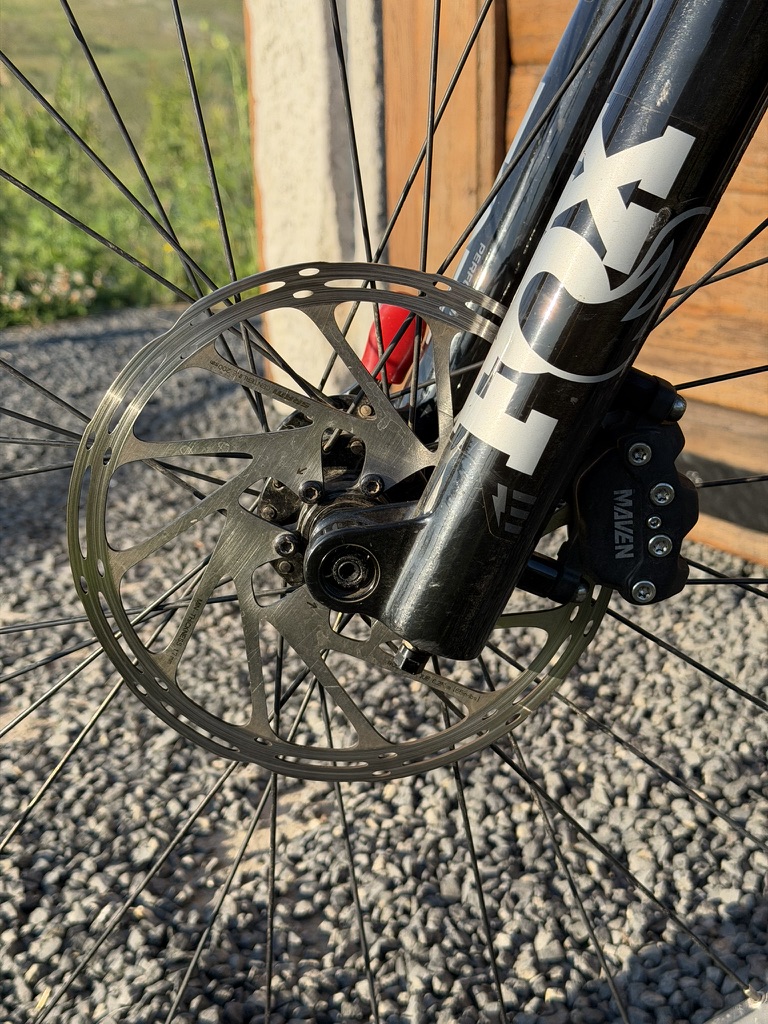
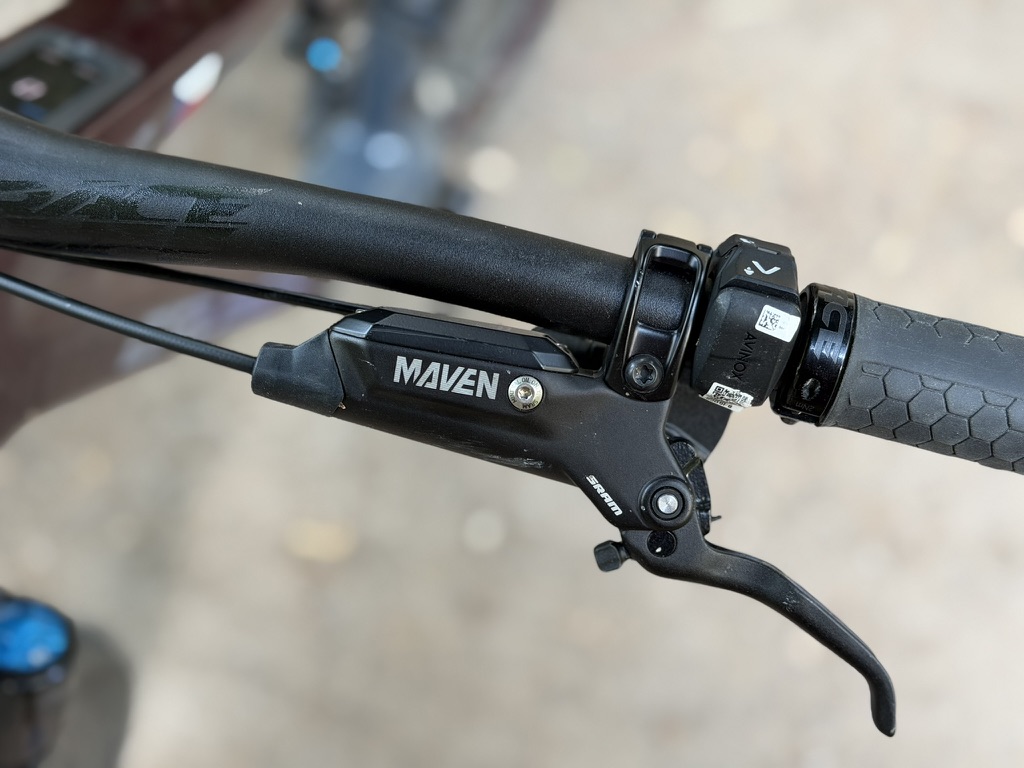
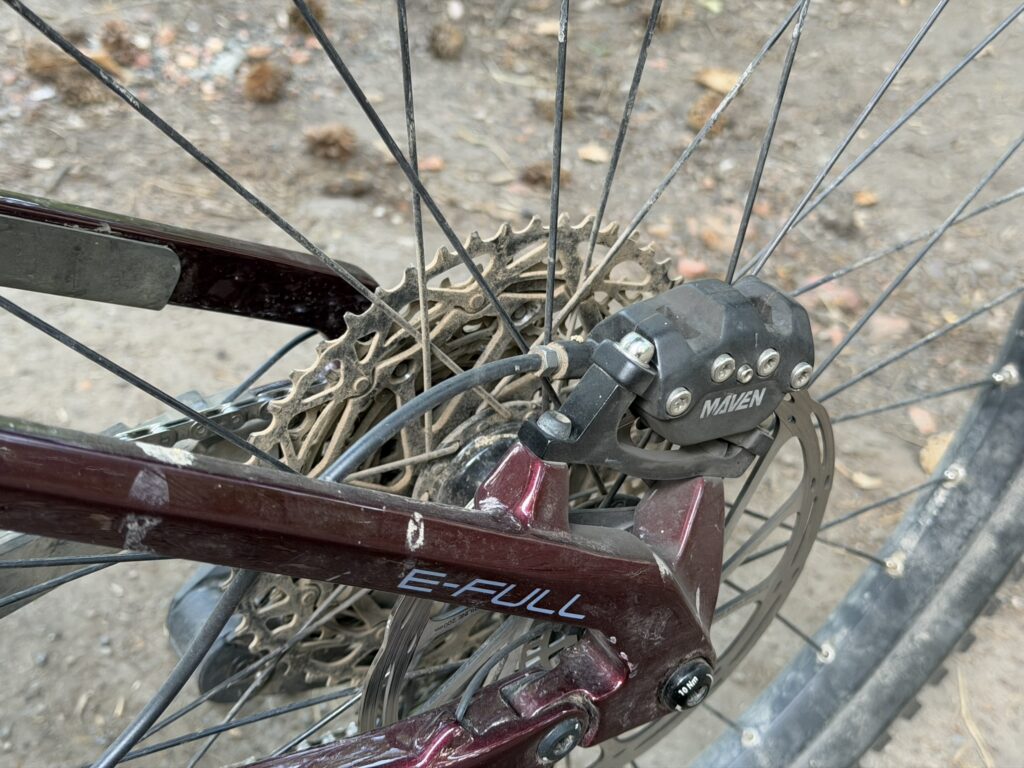
SRAM Maven Base Four-Piston Brakes
When piloting a heavy e-bike that scales over 24 kg (53 lbs) and flying down a trail at high speeds, brakes are a matter of survival. Crussis equipped this model with SRAM Maven Base brakes. The Maven lineup is currently the most powerful, heavy-duty braking system SRAM makes. The „Base“ designation means you are looking at the entry point of this extreme family—there are no polished chrome accents or tool-free reach adjustments here. It is pure, raw stopping power.
These brakes feature a fascinating paradox: they behave exactly like a race car’s brakes, meaning they require heat to work optimally. If you are just cruising along a flat path and occasionally dragging the brakes lightly, they might squeal slightly and feel a bit lazy at the lever, leaving you wondering where the legendary power is. However, the moment you drop into a proper steep descent and hold the levers for a solid minute, the calipers and pads hit their ideal operating temperature. Suddenly, they transform into absolute anchors. They don’t fade a single millimeter and will stop you dead in your tracks. At my weight under 90 kg (198 lbs), the stock 200mm rotors are perfectly adequate, though riders over 120 kg (265 lbs) might want to look into an upgrade to larger discs.
SRAM GX Eagle AXS T-Type Electronic Drivetrain
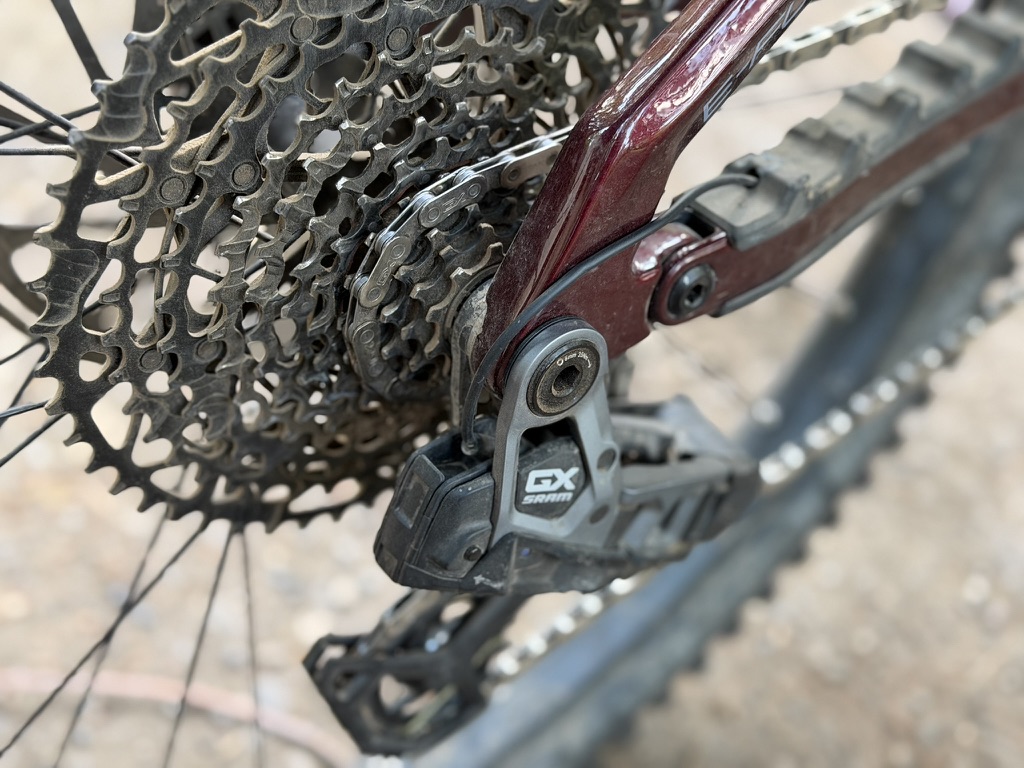
The engineering choice here was incredibly smart. The electronic wireless T-Type (Transmission) derailleur mounts directly to the frame without a traditional derailleur hanger (Full Mount). It shifts instantly, with absolute precision, and most importantly, under the full load of the motor’s massive torque. No crunching, no missed gears—just a clean click and it’s engaged.
The biggest benefit is the complete elimination of a standalone derailleur battery. Standard AXS setups require you to charge a small proprietary battery on the derailleur itself, which can leave you stranded on a single gear if you forget it. Here, a power cable runs directly from the internal drive unit, drawing power centrally from the bike’s main 800Wh battery. It’s one less thing to worry about. The only minor aesthetic drawback is the way the power cable exits and wraps around the derailleur—while 100% functional, it looks a bit unrefined and clunky.
Wheelset, Hubs, and Maxxis Rubber
The stock alloy wheelset is, unfortunately, the only genuine weak link of the entire machine. The wheels are round and they hold a tire, but that is about where the praise ends. Keep in mind that a heavy e-MTB putting down up to 150 Nm of torque subjects wheels to extreme structural stress. The budget alloy rims and softer factory spoke tension struggle to handle this raw power under aggressive cornering. When you push hard into a berm or compress the bike through G-outs, you can clearly feel the wheels flexing and „wallowing,“ losing tracking precision. The hubs take an equal beating and will likely be the first components demanding an upgrade to something heavy-duty.
Conversely, Crussis made no compromises with the tires, choosing the absolute golden standard of the eMTB world. They fitted a Maxxis Assegai up front and a proven Minion DHR II in the rear. For the average user, these tires are spectacular. Despite their aggressive, knobby tread pattern, they don’t drag heavily on tarmac bike paths, and the moment you dive onto wet roots or loose mud, they bite tenaciously. Crussis nailed this selection perfectly.
Telescopic Dropper Post and Frame Geometry
A dropper post is non-negotiable for trail riding. The manufacturer spec’d a basic, cable-actuated mechanical dropper post. It works flawlessly—dropping smoothly out of the way when you need room to maneuver down a steep chute and snapping back up for efficient pedaling on open fire roads. It delivers exactly what you need without unnecessary complexity.
In terms of geometry, online forum experts occasionally criticize Crussis for having slightly more conservative angles and dimensions. However, unless you are a professional enduro racer, you can completely ignore those theoretical numbers. At my height of 186 cm (6’1″), the XL frame fits beautifully, providing a comfortable cockpit and highly predictable, stable handling across all scenarios.
The 240% Formula: The Theory of Absolute Versatility
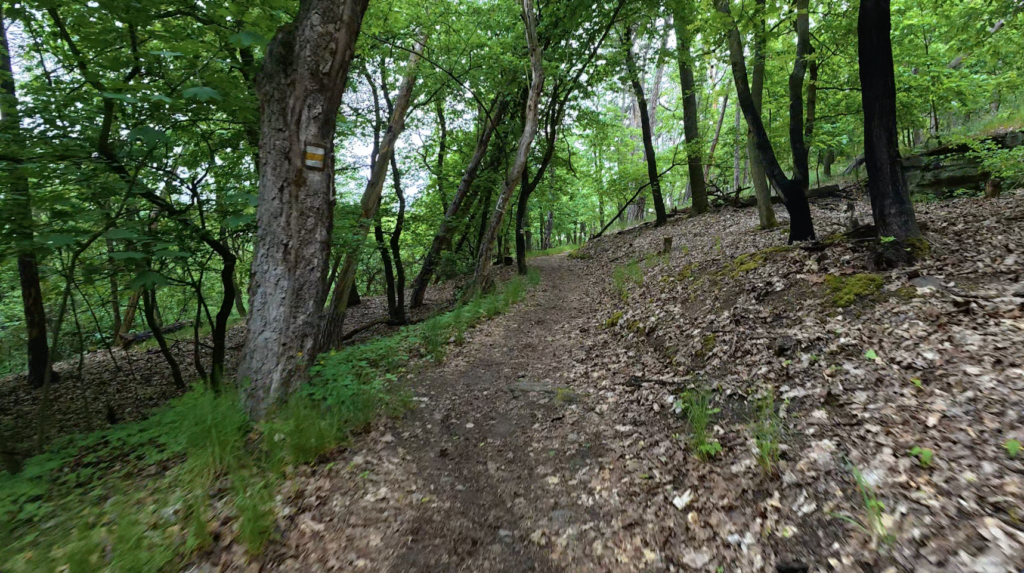
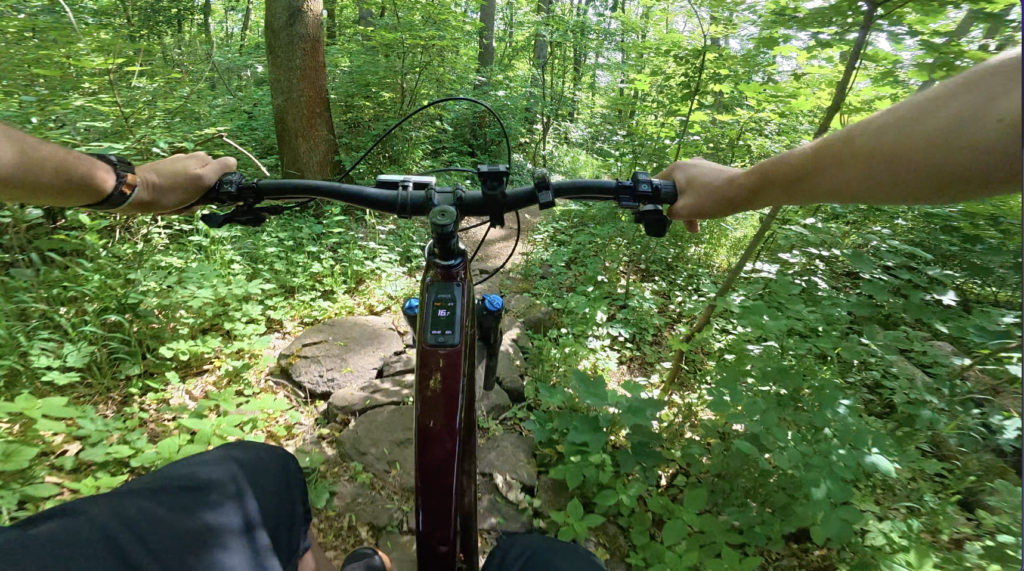
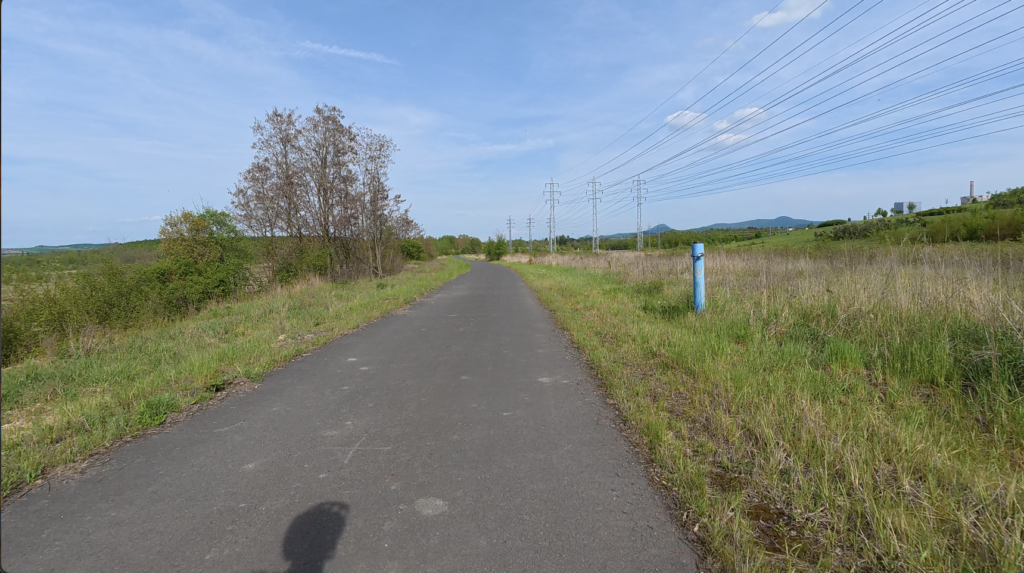
How can a single bicycle operate at 240% efficiency? The reality is that most mountain bikers split their riding across three completely distinct environments: paved bike paths, gravel fire roads, and technical trails or bike parks. After evaluating my first 900 km (560 miles), I developed a bulletproof theory as to why this full-suspension rig is the ultimate king of versatility.
1. Tarmac and Family Bike Paths (Approx. 400 km / 250 miles ridden)
The ideal tool for this job is a lightweight gravel bike—fast, efficient, rolling effortlessly. The Crussis, packed with an 800Wh battery, is a massive 24+ kg (53 lbs) juggernaut. On paper, riding this on pavement should be miserable. Yet, the reality is completely different: engage the lowest Eco assist mode, and the DJI Avinox motor instantly erases the bike’s weight. You glide along effortlessly as if you were riding a featherweight gravel rig. Score: 80%.
2. Light Forest Paths and Gravel Roads (Approx. 150 km / 93 miles ridden)
This domain is usually dominated by cross-country hardtails or modern light e-bikes (like those with a Bosch SX motor) weighing under 20 kg (44 lbs). However, with their small batteries (around 400 Wh), you constantly suffer from range anxiety, nervously staring at the display. With the Crussis and its 800Wh tank, range anxiety simply doesn’t exist. You can blast assist modes, explore unknown detours, and easily cover well over 100 km (62 miles) in a single session. The bike might not be as nimble, but the absolute freedom of range heavily outweighs it. Score: 80%.
3. Bike Parks and Aggressive Trails (Remaining mileage)
The ultimate weapon here would be a dedicated purebred enduro e-bike with aggressive geometry (like a Commencal Meta Power SX) built to swallow brutal downhill tracks. The Crussis, with its tamer All-Mountain geometry, naturally gives up some ground in high-speed, rough rock gardens. But for a regular rider looking to enjoy a weekend at a bike park, this machine clears every line with immense composure and easily outperforms the limits of the rider. Score: 80%.
Total Versatility Calculation:
Adding up the scores from all three environments (80% + 80% + 80%) yields a total of 240%. The Crussis e-Full 12.11 is the ultimate winner for anyone who doesn’t want three separate single-purpose bikes taking up garage space and costing a fortune, but instead wants one single machine that handles everything exceptionally well.
| Bike Type | Tarmac / Bike Paths | Forest / Gravel Roads | Bike Parks / Trails | Total Versatility Score |
| Gravel Bike | 100% | 30% (strictly for masochists) | 0% (suicidal) | 130% |
| Light E-bike (400 Wh) | 40% (battery dies halfway) | 40% (battery dies halfway) | 100% | 180% |
| Crussis e-Full 12.11 | 80% | 80% | 80% | 240% |
The DJI Avinox M2S Drive Unit & Integrated 800Wh Battery
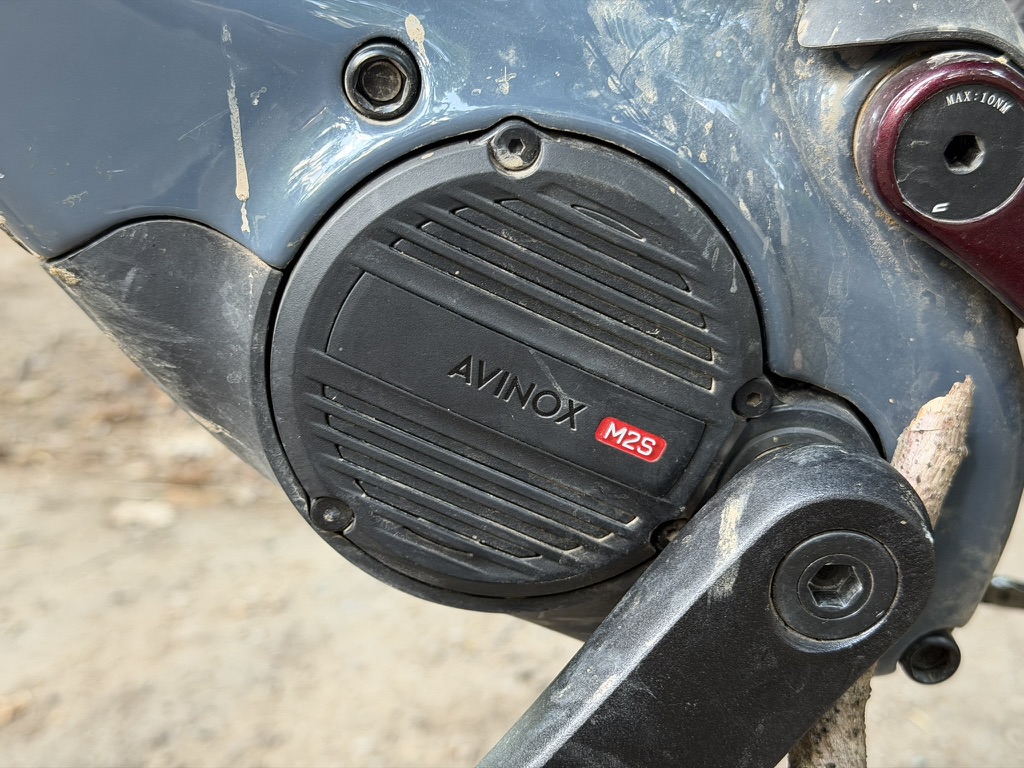
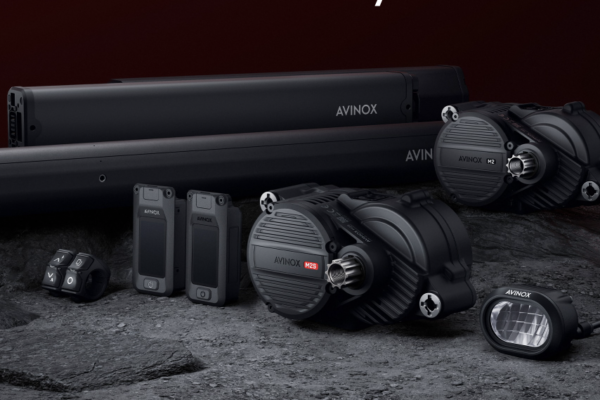
The crowning jewel of this entire bike is the Avinox M2S drive unit. Crussis did not implement any software-based power restrictions for this mid-tier model; the motor delivers its full, unrestricted specifications: 250W nominal power, a staggering 1300W peak output, 130 Nm of standard torque, and a brutal 150 Nm in short-burst Boost mode.
The Avinox system benefits immensely from DJI’s massive drone-building expertise—it features incredible power density, highly sophisticated software algorithms, and tightly packed battery cells. International media outlets have widely praised it as the best mass-production e-MTB motor on the market regarding power-to-weight ratio. The power delivery is phenomenally smooth, matching your pedaling input naturally. It responds instantly but never feels twitchy or erratic; it doesn’t jerk you forward like a motorcycle. The motor thrives at a higher pedaling cadence (above 80 RPM), rewarding you with maximum efficiency. Furthermore, it is whisper-quiet and offers zero mechanical drag when riding with the system turned off.
Some critics claim that this much power is overkill and that you will constantly be waiting for your friends at the top of every climb. While true, that massive power reserve is invaluable. It is akin to driving a sports car with a five-liter engine—90% of the time you are running at quarter-throttle, but you know that when you need to clear a nearly impossible vertical wall, plow through deep mud, or just put a massive smile on your face, the raw grunt is right there waiting.
Real-World 800Wh Battery Consumption
- „Family Cruise“ Mode (Eco, flats, tarmac): The motor purely counteracts the bike’s physical weight. Total range consistently lands between 120 to 150 km (75 to 93 miles) with roughly 1,000 meters (3,300 feet) of elevation gain. Your body will give up long before the battery does.
- „Classic eMTB Madness“ Mode (Trail / Auto mix in rugged terrain): My most frequent riding profile. Punchy climbs, root networks, technical singletrack. Total range falls between 65 to 85 km (40 to 53 miles), but crucially, you can conquer a massive 1,800 to 2,200 vertical meters (5,900 to 7,200 feet) on a single charge—an absolute benchmark in today’s market.
- „Total Destruction“ Mode (Non-stop Boost / Turbo, climbing straight up ski slopes): You can drain the battery completely in under two hours. However, in that brief window, you will cover 35 to 45 km (22 to 28 miles) and rocket up a brutal 1,300 to 1,500 vertical meters (4,200 to 4,900 feet).
DJI’s intelligent Auto mode is calibrated so brilliantly that it regularly saves 15–20% of battery life compared to shifting modes manually. It evaluates your riding dynamics instantly to deliver exactly the support required. Additionally, the massive 12A GaN rapid charger can juice up 75% of the battery in just an hour and a half (a full charge takes roughly 2.5 hours). Plugging the bike in during a quick lunch stop ensures you are set for the rest of the day.
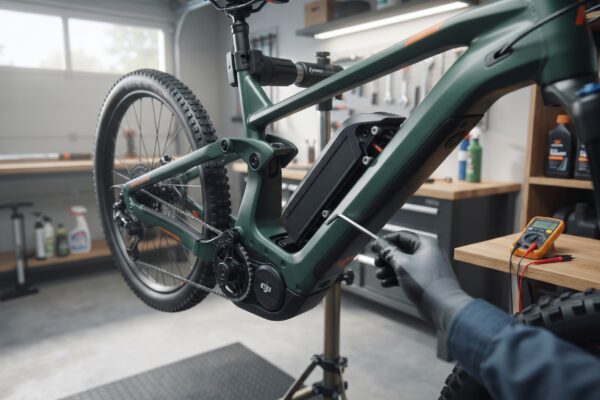
The battery is permanently integrated into the down tube, which often draws criticism online. While you cannot swap it out with a simple turn of a key, it poses no major hurdle for winter storage: simply undo a few structural bolts, pivot the motor down, and slide the battery out smoothly from the bottom of the frame to keep it safe in the warmth of your home.
The DJI Technological Ecosystem & Smart Features
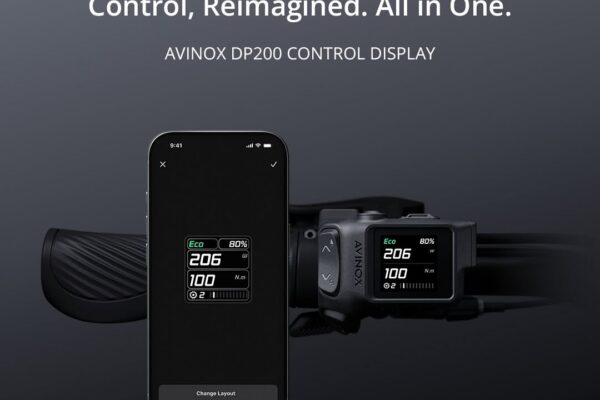
The integration of the Avinox system with DJI’s ecosystem pushes this machine straight into the realm of sci-fi tech. The entire system communicates wirelessly via Bluetooth. Using the wireless handlebar remotes, you can instantly trigger or stop recording on a DJI Osmo Action camera. The crisp 2-inch OLED color display embedded into the top tube provides instant visual confirmation of the camera’s status.
The true showstopper, however, is the telemetry data export. After finishing a ride, you can pull full telemetry logs (real-time speed, cadence, your human wattage output, and the motor’s electrical wattage) and overlay them directly as graphical gauges into your edited video projects.
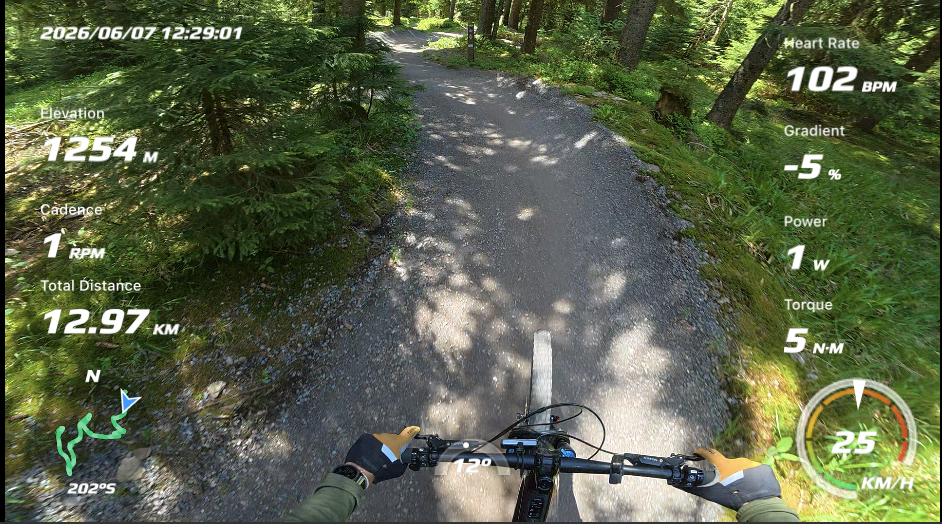
The bike also supports direct pairing with heart rate monitors. Within the Avinox Ride app, you can lock in a target heart rate zone (e.g., Zone 2 for aerobic base training), and the motor will dynamically alter its assistance on the fly—if your heart rate spikes, the motor adds power to save your legs; if your heart rate drops, the motor backs off to make you work harder. Furthermore, a built-in cellular SIM card slot allows for advanced GPS tracking and robust anti-theft security features.
What Bothers Me After 900 km / 560 miles (Flaws and Drawbacks)
To ensure this review remains entirely objective, we must highlight the negative aspects that surfaced during aggressive, long-term testing:
- Fragile, Soft Paint Finish: While the glossy clear-coated carbon frame looks stunning out of the box, the paint coat picks up micro-scratches almost out of thin air. Wrapping the entire frame in high-quality protective film immediately after purchase is a mandatory requirement.
- Extreme Charger Temperatures: The heavy-duty 12A charger pulls serious current during rapid charging sessions and becomes blistering hot to the touch. You must be careful about what surface you place it on while charging at home.
- Unrefined Derailleur Cable Routing: While drawing power directly from the main battery for the AXS derailleur is fantastic, the execution of the wire routing near the rear dropout looks aesthetically cheap and unpolished.
Key Advantages (Pros)
- Unrivaled DJI Avinox M2S drive unit (brutal 150 Nm torque, whisper-quiet)
- Massive 800Wh battery capacity completely erasing range anxiety
- Blazing fast 12A GaN charging (75% in 1.5 hours)
- Absolute versatility (The 240% Formula—excels at bike paths, gravel, and bike parks)
- Unique DJI tech ecosystem (video telemetry overlay, action cam control, built-in SIM)
- Premium spec list: FOX suspension, SRAM Maven brakes, wireless AXS shifting
- Easy software adjustment via VPN to unlock the 32 km/h (20 mph) speed limit
Key Disadvantages (Cons)
- Soft alloy wheels that noticeably flex and wallow under hard cornering load
- Delicate frame paint finish highly prone to cosmetic scratching
- The GaN fast charger runs extremely hot during operation
- Total weight exceeds 24 kg (53 lbs), noticeable when lifting the bike into a vehicle
- Clunky, unrefined external power wire routing to the rear derailleur
Final Verdict
At approximately €5,900 ($6,400), the Crussis e-Full 12.11 represents a significant financial investment. However, it delivers a technological ecosystem that legacy premium brands relying on Bosch or Shimano systems simply cannot match right now. For your money, you get a brutally powerful, quiet, and deeply addictive motor, massive range, lightning-fast charging, and a brilliantly curated component mix.
With every major tech purchase, I always perform a simple retrospective assessment: Would I spend my own hard-earned money on this exact product again knowing everything I know after a month and 900 km (560 miles)? For this machine, I can say with absolute clarity: YES, I would take the cash and go buy it again without a moment’s hesitation.
There is currently no other e-bike on the market that bridges the gap between quiet family cruises and aggressive bike park shredding so effortlessly. The minor complaints, such as the softer rims or fragile paint, can be managed and upgraded over time. The core foundation—the stiff carbon frame and the revolutionary drive unit—works flawlessly and delivers pure joy on every single ride.
Vasek
Avinox.cz is primarily a Czech-language blog about Avinox e-bikes and everything around them. This is one of the few articles published in English.
If you’d like to see more English content — leave a comment below. If there’s enough interest, I’ll start creating regular English content.
This is a really thorough review. Invaluable. Thanks.